



“My goal is straightforward in making Orange a place where people can work, live, and enjoy their community, backed by a government that runs efficiently and respects residents’ time and tax dollars,” said candidate Albert “AJ” Ricci.
When one thinks of the City of Orange, the first images that come to mind are of historic, bustling Old Towne and its myriad boutiques; the iconic mosaic tile fountain at the center of the Orange Circle roundabout; and Chapman University. All of these are contained within District 1, which is easily understood to be the beating heart of Orange County’s 3rd oldest city.
This November, District 1 will elect a new representative—and it’s unique among the other races in how markedly crowded the field has become. While Districts 4 and 6 see incumbent Denis Bilodeau and newcomer Brendon Mueller respectively running uncontested—and the Mayor’s race a two-way battle between sitting Councilmembers Dan Slater and Arianna Barrios—District 1 has four candidates in the running: Jonathan St. Clair, Brandy Romero, Albert “AJ” Ricci, and Ernest Glasgow.
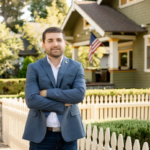
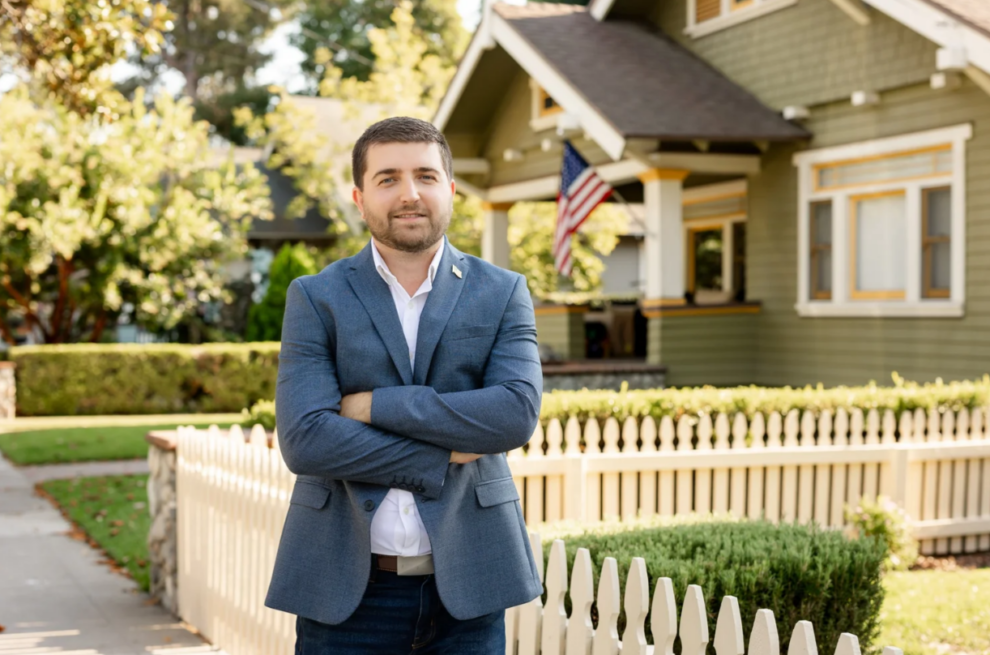
We reached out to each of the District 1 candidates to better understand who they are and what they hope to accomplish if elected to City Council. What follows will cover our discussion with AJ Ricci, a local business owner, Chapman graduate, and lifelong Orange resident. He’s also the Vice Chair of the City’s Traffic Commission.
His understanding of business, permitting and zoning issues, and other municipal affairs—as well as his work with the Costa Mesa Police Department—have earned Ricci endorsements from Orange County Sheriff Don Barnes, Assemblymember Phillip Chen, and Orange County Supervisor Don Wagner, plus three current sitting Council Members.
“I see our local issues as fixable and our goals attainable; you just need a council in sync with that goal,” said Ricci.
Chief among those goals, according to Ricci, is improving economic development—particularly the city’s ability to attract commercial investment as retail habits change.
“Surrounding cities have spent the better part of a decade actively marketing themselves to new business and development, and we haven’t kept pace,” said Ricci. “Some of this is coming regardless of who wins this November. Commercial properties change hands, their tax basis resets to current value, and cities that are prepared capture that investment while cities that aren’t watching it go elsewhere.”

Ricci expressed a desire to see corridors like Tustin Street, Katella Avenue, Collins Avenue, Orange-Olive Road, and Lincoln Avenue, which were built to carry commercial activity and are “capable of adapting to what businesses and shoppers want today,” receive more of the city’s capital improvement dollars and business retention focus which has overwhelmingly gone to Old Towne.
“That’s not a criticism of investing in Old Towne,” said Ricci. “It’s earned that attention. It’s that the rest of the city’s commercial corridors have been treated as an afterthought, and it shows in vacancies and lost investment along those streets. Fixing that means treating economic development as a citywide responsibility, not a downtown-only one, and updating our land use planning so those corridors can actually attract the investment they’re suited for.”
But right now—as things stand—Orange isn’t ready, Ricci argued.
“Our land use table and planning department haven’t been updated to make it easy for someone with capital to invest here, so we’re turning away growth that would otherwise strengthen our sales tax base. That base funds police, fire, and the day-to-day services residents count on. Fixing that, and staying disciplined with our budget as we weather the same deficit pressures hitting cities across Orange County, is the work Orange needs from its Council Members over the next four years.”
Indeed, the city’s financial position looks somewhat bleak. The General Fund is projected to end FY26 with an operating deficit of $3.7 million, and that’s just the beginning. Over the next six years, the city projects more than $122 million in cumulative deficit.
How the city will solve the problem remains a contentious and hotly-debated topic. One of the proposed solutions is to implement a new, additional local sales tax and increase an existing hotel tax from 10% to 14% which would be imposed on hotels with 11 rooms or more. These will appear on residents’ ballots as Measures I and J respectively.
Ricci doesn’t believe Measure I in particular fixes Orange’s structural fiscal problems: “It hands the city 13 years of runway without forcing the discipline to fix why we’re short of cash in the first place. If I’d support a sales tax at all, it would be a much shorter term, not a 13-year blank check.”
Instead of taxing the people who already live here, Ricci would rather compete to capture spending from those who come here to shop and stay.
“Orange has turned down commercial and hospitality investment other cities [have] welcomed, and we’re patching the gap with one-time transfers instead of real revenue,” said Ricci. “Before asking Orange to pay more, I want to see the city prove it’s serious about growing revenue the right way without using the residents to fill the gap.”
While most of the aforementioned issues are citywide, Ricci also outlined several District 1-specific goals. He wants to continue refining traffic and parking policies around Old Towne as the area draws shoppers and visitors, while making the city’s expectations for restoring and maintaining historic properties easier for owners to navigate.
“City Hall should be easy to reach and easy to use, with online resources that actually work for people who don’t have time to navigate a maze of forms,” Ricci said. This effort includes “modernizing our back-end systems, faster permitting, simpler contracts, processes that don’t waste residents’ time.”
We wrapped up our discussion by asking Ricci if there’s anything else he believes residents should know about his candidacy.
“I’m running to get Orange back to the basics of good governance,” Ricci said. “I believe in keeping things simple; focus on the outcome that matters, and don’t let bureaucracy get in the way of it.”
“My goal is straightforward in making Orange a place where people can work, live, and enjoy their community, backed by a government that runs efficiently and respects residents’ time and tax dollars,” he concluded.