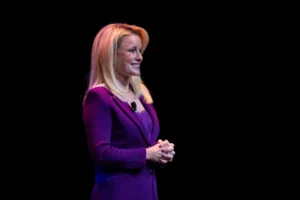




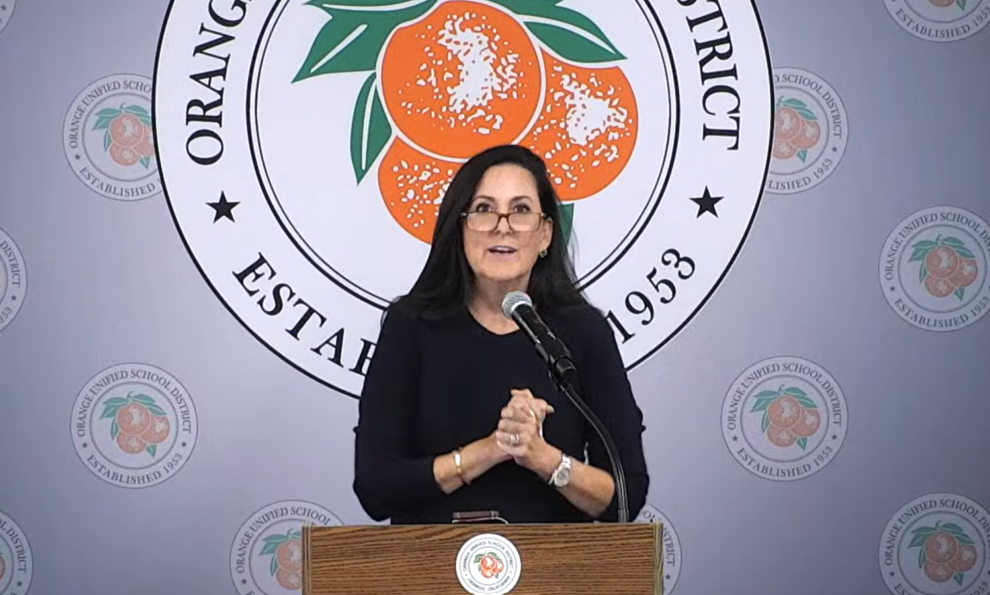

“If something is happening in the district, we have a right to know,” said Villa Park Councilwoman and OUSD candidate Crystal Miles.
Two months ago, Villa Park Councilwoman Crystal Miles launched her campaign for Orange Unified School District Board of Trustees’ Area Four seat with a pledge to restore transparency to OUSD. And though the election itself won’t be held for another five months, candidate Miles can already take credit for helping to deliver a win for parents on that very front.
Namely, OUSD has been directed to create a new policy that would require the Board to disclose and discuss large legal expenditures with the public in the future. This came about at the June 4, 2026 Board of Trustees meeting after Miles provided the sole public comment regarding the approval of the consent calendar.
For those unfamiliar, consent calendars exist to group routine, non-controversial items together so that the Board can approve them all at once with a single unanimous vote rather than spending time on each item.
Miles noticed that the calendar contained the approval of $1.6 million in legal expenses to Tau Rossini, LLP (appearing on the agenda as “Item 11O”). Beyond that—as pointed out by Miles—it was unknown if this is a litigation issue, a labor issue, a government construction issue, or something else entirely. She articulated that this is a large sum of money and that the Board should discuss this with the public rather than throwing it onto the consent calendar where it would likely be passed without further scrutiny.
“I am going to ask again if one of you would please pull this so that we can have an understanding,” said Miles.
This is not her first time making this ask. This legal expense has increased fourfold since it was first introduced in December 2024.
“It’s now up to $1.6 million. When I was here in May, it was $1.2 [million]—up from $400,000.”
During that May meeting, Miles had asked the Board to explain what measurable outcomes justify the contracts, whether or not there was a competitive selection process, what accountability exists if goals aren’t met, and why expenditures were placed on consent in the first place. Despite these concerns, the Board voted to approve the consent calendar. That includes Area Four Trustee Sara Pelly, who will face Miles in the November elections.
Later in the meeting, Trustee Kris Erickson defended the Board’s actions and said that approving legal affairs as part of the consent calendar is “the way it’s always been handled.”
“This is existing litigation. Obviously, those discussions happen in closed session. So at the risk of making sure that we’re complying with the law, and ensuring that we’re not oversharing, it’s always been done this way.”
But Miles anticipated this response: “I know you all know that I know that you can pull this to discuss without breaking any kind of attorney-client privilege.”
The matter comes down to a difference of opinion over good governance. Miles never alleged that the Board has run afoul of the law—just that parents have a right to know what’s going on.
“There’s a lot of people that truly care deeply—students, teachers, stakeholders, future parents—that really want to know our district is solid… I don’t know why you guys want to keep this on the consent [calendar]… and I don’t know why none of you would hold each other accountable,” she said.
One might expect that Miles’ concerns would fall on deaf ears given the amount of times she has contended with the sitting Board members. Instead, Trustee Erickson moved to pull the item from the agenda and Trustee Stephen Glass asked Superintendent Rachel Monarrez to share what she can about the expense. She explained that it covers legal defense for the District in two ongoing cases dating back to 2020.
“We as a Board are committed to transparency, and we as a Board do not want to appear as if we are hiding something from the public. So to remain in line with the law… I want to ask: is there a current Board policy addressing matters such as these that we can notify the public about circumstances such as these?” asked Glass.
“No, we do not have a current board policy in that area,” Monarrez responded.
“Okay, so hearing that… In the interest of transparency, I believe it would be appropriate to develop a board policy to address matters similar to these,” said Glass. He then advised that Monarrez work with staff on implementation with the goal of presenting the policy to the Board during its September meeting.
The public’s response to the Board’s move towards transparency—and Miles’ involvement in it—has been quite positive. On Instagram, a network of community members called Orange United praised Miles saying “her voice made a difference.”